
Communist Review MAY-AUG 2026 Preview
Communist Review MAY-AUGUST 2026 Preview

Editorial
Martin Levy
13 April 2026
The General Strike, wrote Robin Page Arnot in Labour Monthly in May 1956, “was the greatest event in the last 100 years of the British working class.” We could now say that it was the greatest event ever. Many valiant battles have been fought by British workers over the last 70 years, but nothing has reached the scale and scope of what happened in 1926.
Events are taking place to mark the Centenary this year. The TUC has devoted a whole section of its website to it (https://www.tuc.org.uk/GeneralStrike100years). “Although”, says the TUC, “the strike did not achieve its immediate aims it left a lasting impact on politics, unions and workers’ rights in Britain. … It reinforced the importance of trade unions as a collective voice for workers, [and] sparked debates about workers’ rights, industrial relations and the role of the state that continue today.”
That puts rather too fine a gloss on it. In the aftermath of the Strike, the miners were left to fight alone for another six months – and their ultimate defeat left a mark on the rest of the trade union movement. By their militancy and unity, the miners had been able to inspire the rest of the trade union movement, and were not able to resume that role until the strikes of 1972 and 1974. It is little wonder that the Thatcher government moved to neutralise them by destroying the coal industry altogether.
Furthermore, immediately after the end of the Strike, there was widespread victimisation in some trades such as rail and printing. Overall, a mood of defensiveness and demoralisation set in and trade union membership dropped. The government moved to exploit the defeat by introducing the Trade Disputes and Trade Unions Act 1927, which made it against the law to engage in mass picketing leading to “intimidation”, in secondary action and in any strike whose purpose was to coerce the government of the day directly or indirectly. Incitement to participate in an unlawful strike was made a criminal offence, punishable by imprisonment for up to two years; and the attorney general was empowered to sequester the assets and funds of unions involved in such strikes. Trade union members had to contract-in to any political levy which their union made on their behalf, and civil service unions were banned from affiliating to the TUC and having “political” objectives. It took until 1946 for the Act to be repealed, and of course the Tories later came back again to reintroduce similar measures, first under Edward Heath and then under Thatcher.
Ideologically, the TUC and most union leaders moved away at the time not just from industrial action of a political character but from mass trade union action in general, and went on to embrace Mondism, which was essentially class collaborationism. We still suffer from the legacy of that today.
If we are going to honour properly the struggles of the workers in 1926, then we have to examine what was really going on and why the TUC General Council betrayed the miners after 9 days, and draw appropriate conclusions regarding class struggle, the state and the need to fight for socialism. And, for correct conclusions to be drawn, we need to recognise that there are two Centenaries – not just the General Strike but the Miners’ Lockout too.
Much has been written about the Strike, and new books on it are appearing this year. For this edition of Communist Review we rely in part on the reflections and analysis, written many years ago, of Party members who were themselves active in the Strike and in fighting the Miners’ Lockout.
First, we reproduce the aforementioned article by Robin Page Arnot. In his graphic account he remarks that “Though the miners were the first to be attacked, it was understood throughout the ranks of organised labour that they would not be the last.” The fatal defect, he says, was one of leadership; and the lessons are that “The unity and strength of the working class, … if combined with the necessary fighting leadership, can end the domination of the ruling class generally, and lead the whole people along the road to socialism.” Later in this edition of CR, we include reminiscences of his direct involvement in the struggle of 1926.
In other articles, from 50 years ago, Jack Cohen looks at the battle between Marxism and reformism before and during the General Strike, showing how the General Council regarded the Strike as nothing more than an industrial dispute, and were geared to the traditional search for a ‘formula’ in which both sides had ‘rights’; while Mick Jenkins draws on the long traditions of general strikes in Britain to give a background to the development of councils of action before and during the 1926 Strike itself, discussing the ‘dual power’ that existed, and describing the role that trades councils need to develop to have the potential to become councils of action in future.
Also from 50 years ago, John Foster illustrates the dilemma faced by the ruling class in the early 1920s, due to the rise of a mass Labour Party, and the strategy chosen of ‘constitutionalising’ Labour in order to prevent a working class turn towards revolution. He shows how this strategy was employed during the General Strike itself, with soft rather than hard tactics and “labour’s own right-wing leaders being manoeuvred into a position where they effectively replaced local employers as the main purveyors of capitalist assumptions among working people”.
For our final article from 1976, and to give due attention to the Miners’ Lockout, we reprint George Short’s account of how the miners fought on valiantly when abandoned. We couple that with a much more recent reprint, Sue Bruley’s account of the role of women during the 1926 Lockout in South Wales. There has been very little written on women’s activities in the General Strike and the Lockout, and Sue does reveal the very different male-female gender roles at the time, contrasting them with the activities of Women Against Pit Closures in the 1984-85 strike.
For our final article Nick Moss includes in his Soul Food column a review of poems celebrating the General Strike Centenary from Culture Matters. His title is very much to the point.
Several of our contributors from 50 or 70 years ago end on a positive note. This may jar today, as the labour movement has moved backwards since then: key industries have been destroyed, along with close-knit communities like the pit villages. Trade union membership has dropped by over half, and we still have restrictive anti-union legislation, despite the Employment Rights Act 2025. Exploitation is much more masked nowadays than in the past, and consequently there has been a drop in class consciousness, even if, over the last few years, there has been a welcome return of trade union consciousness. How to rebuild class consciousness should form part of the lessons of 1926. The Morning Star conference on April 11 was a good start to that process. Building class politics is the key to addressing every crisis we face.
FROM THE ARCHIVES … 70 YEARS AGO - The General Strike, 1926
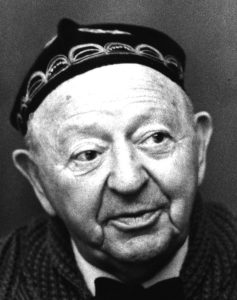
Robin Page Arnot
The General Strike was the greatest event in the last 100 years of the British working class. Today there are many who would be happy to have it forgotten, or treated as an abnormal disturbance of what they would present as a relatively smooth chronicle of social advance, powered by the reciprocating engine of the two-party system. But it cannot be so treated. Nor can it ever be forgotten. Hushing-up of its lessons by hack historians cannot abolish its significance. For the lessons of the General Strike of thirty years ago have still a direct bearing on our problems today.
At midnight on April 30, 1926, over a million miners were locked out. On Saturday, May 1, the General Strike was declared, to take effect three days later. It was carried in a conference of executives of trade unions by 3,653,527 votes to 49,911. That same First of May there assembled in London the greatest demonstration since May Day began in 1890, with its slogans against war and for the shorter working week. Trade union banners streamed before the breeze as the marchers went to Hyde Park, ready to take part in the action against lower wages and longer hours that was to be the greatest in three generations. At Monday midnight, May 3, the General Strike began. It was called off at noon on Wednesday, May 12. It lasted nine days.
Arthur Cook, the miners’ national secretary, in his pamphlet The Nine Days described it in burning words:
“Tuesday, May 4, started with the workers answering the call. What a wonderful response! What loyalty!! What solidarity!!! From John o’ Groats to Land’s End the workers answered the call to arms to defend us, to defend the brave miner in his fight for a living wage.”
Hurriedly the General Council formed their Committees, made preparations to face this colossal task – the first in the history of this country. No one could overestimate the greatness of the task that faced the General Council, and to the credit of many of the members – especially Ernest Bevin – they made every effort possible to bring into being machinery to cope with the requirements.
The difficulties of transport, of communication, of giving information, were enormous; but the foresight and energy of the officials in the country and of the rank and file rose to the occasion. Links were formed, bulletins were issued; officials, staff and voluntary workers of the TUC and the Labour Party worked night and day to create the machinery necessary to link up the whole movement – machinery that would have been prepared by commonsense leadership months and months before.
It was a wonderful achievement, a wonderful accomplishment that proved conclusively that the labour movement has the men and women that are capable in an emergency of providing the means of carrying on the country. Who can forget the effect of motor conveyances with posters saying ‘By permission of the TUC’? The Government with its OMS [Organisation for the Maintenance of Supplies –Ed] were absolutely demoralised. Confidence, calm and order prevailed everywhere, despite the irritation caused by the volunteers, blacklegs, and special constables. The workers acted as one. Splendid discipline! Splendid loyalty!”
Cook wrote these words when the miners were in the second month of their grim seven months lock-out. He did not exaggerate. The communiqué of the Trades Union Congress on the second day of the General Strike is evidence of this.
The idea of a general strike, talked of amongst British workers during the great strikes of separate industries in the four years before 1914, had spread widely when the famous ‘triple alliance’ of miners, railwaymen and transport workers was formed in 1917, and when its threats of joint strike action had more than once compelled the government to give way – for example, when Churchill as Secretary of State for War appeared bent on sending more troops to Archangel to continue making war on the first workers’ republic. But the train of events before the General Strike of May, 1926, began little more than a year earlier, when Churchill as Chancellor of the Exchequer in the Baldwin administration put the pound sterling back on the gold standard, thus plunging into a policy of deflation which was bound to lower the standard of living, as well as create unemployment. Or, as Prime Minister Stanley Baldwin said in an unguarded moment: “The wages of all workers will have to come down.”
Though the miners were the first to be attacked, it was understood throughout the ranks of organised labour that they would not be the last. Therefore, when the coal owners announced a lock-out of miners for July 31, 1925, the rest of the movement rallied, the Trades Union Congress General Council appointed a special committee to act along with the transport and railway unions and an embargo was laid on all movements of coal, if the lock-out began.
Thereupon the Baldwin cabinet which had been backing the coal owners suddenly yielded, and offered a subsidy for nine months to enable existing wages to be paid. They were buying time, time to get ready for ‘a showdown’. The lock-out notices were hastily withdrawn. It was Friday, July 31, ever after known as Red Friday.
Red Friday was followed by the high water mark of Trades Union Congresses, at Scarborough in September, 1925, celebrating the victory of working class unity. But on the side of the ruling class there was wild anger at the defeat suffered and intensive preparations to break any renewal of strike action when the subsidy period ran out at the end of nine months. When half the time was up they were ready – as Churchill boasted in menacing tones in the House of Commons on December 10, 1925. But when it came to the point, despite the full preparations on the side of the ruling class and the lack of preparations on the side of the Trades Union Congress, the unity of the working class once more proved unbreakable.
Tuesday, May 4, 1926. It was a different Britain that morning. There were no passenger trains, no coal or heavy goods traffic, no evening papers, no trams or omnibuses. Not only the organised workers in the trades affected, but in most cases the unorganised workers responded also to the call. The slogan popularised by Arthur Cook was taken up everywhere: “Not a penny off the pay; not a minute on the day.”
On the other side the government was busy enrolling volunteers through all its agencies to break the strike, while at the same time it began its repressive measures with the arrest of Shapurji Saklatvala, then the solitary Communist who was a Member of Parliament, for a speech delivered on May Day.
Not only had all the members of unions answered the strike call of their Executive Committees but within the unions the most active members were prepared and were active in improvised organisation. They had been put on the alert by the campaign for preparedness carried out by the left wing and in particular by the Minority Movement and the Communist Party. A great conference of the Minority Movement, headed by Tom Mann its chairman and Arthur Horner its acting secretary, had mobilised the most active and militant spirits in the ranks of the unions. In each locality men like these and women like these were in the forefront of the struggle.
Everything possible was attempted by the Government to break the unity of the workers. The British Broadcasting Company in the absence of newspapers was able to disseminate alarmist news or propaganda statements calculated to weaken the unity of the workers. A group of churchmen headed by the Archbishop of Canterbury were not in agreement with the Baldwin-Churchill government: the BBC refused to allow the Archbishop to broadcast. But they gave the fullest prominence to a declaration by Cardinal Bourne that the General Strike was “a sin against the obedience which we owe to God”. Every other propagandist agency was used. Every Liberal statesman (except Lloyd George) supported the Tory government against the strikers. Always in vain. Catholic or protestant, skilled or unskilled, belonging to or voting for whatever party (Tory, Liberal, Labour, Communist), the strikers stood together, their unity was complete. The two great classes of British society were parted by a gulf that widened every day.
Everybody knew the proverb Unity is Strength. But until the General Strike no one knew the exceedingly great strength of the British working class when united. Many of the workers themselves did not know it, but in these opening days of May 1926, they began to realise that everything in the country depended finally on them, on their daily toil for meagre enough earnings. They began to realise the class division: and to see the State as the instrument of the ruling class. All the pomp and panoply of war, all the forces of law and order were also seen as instruments of the ruling class. Those who saw warships at the mouth of the Tyne, smaller war vessels brought up the river, to overawe the strikers in Newcastle and the colliery districts will never forget what a revelation this was of the attitude of the ruling class. But neither this nor the widespread arrests, nor the baton charges, nor the savage sentences meted out by ruling class magistrates spread any dismay amongst the workers. On the contrary, it roused a feeling of class hatred that brought greater activity and greater strength. They were up against a government which was stronger than any Tory government had been for well nigh a hundred years because that government was equipped with special powers ready to hand in the Emergency Powers Act of 1920, an Act passed against the protest of the Labour Party and the trade unions, an Act which upon the issue of a Royal proclamation converted Britain into a police state. The Baldwin-Churchill government wielded these powers ruthlessly, but for every one arrested there were ten others to take his or her place. The strength and organising power of the workers grew from day to day. On the ninth day of the strike the BBC 10 am bulletin concluded with the words: “The position as a whole is still one of deadlock.”
The fatal defect was one of leadership. It is a painful memory today, that ignominious and shameful surrender, that sudden calling off of the General Strike. It is heartening to remember that when the railway companies and the other employers tried to impose harsh terms the strikers stayed out, refused to go back to work until the terms were modified.
Today the lessons of the General Strike are clear. The unity of the working class, the strength of the working class, if combined with the necessary fighting leadership can end the domination of the Tories and the ruling class generally, and lead the whole people along the road to socialism.
Labour Monthly, May 1966, pp 215-221.
Notes and References
1 Harry Pollitt, Secretary of the Minority Movement, together with other leaders of the Communist Party (William Gallacher, Wal Hannington, Albert Inkpin, William Rust) was lying in Wandsworth Jail on a twelve months sentence, inflicted after a state trial for seditious libel, set on foot by the government to intimidate the workers and prevent their united action.